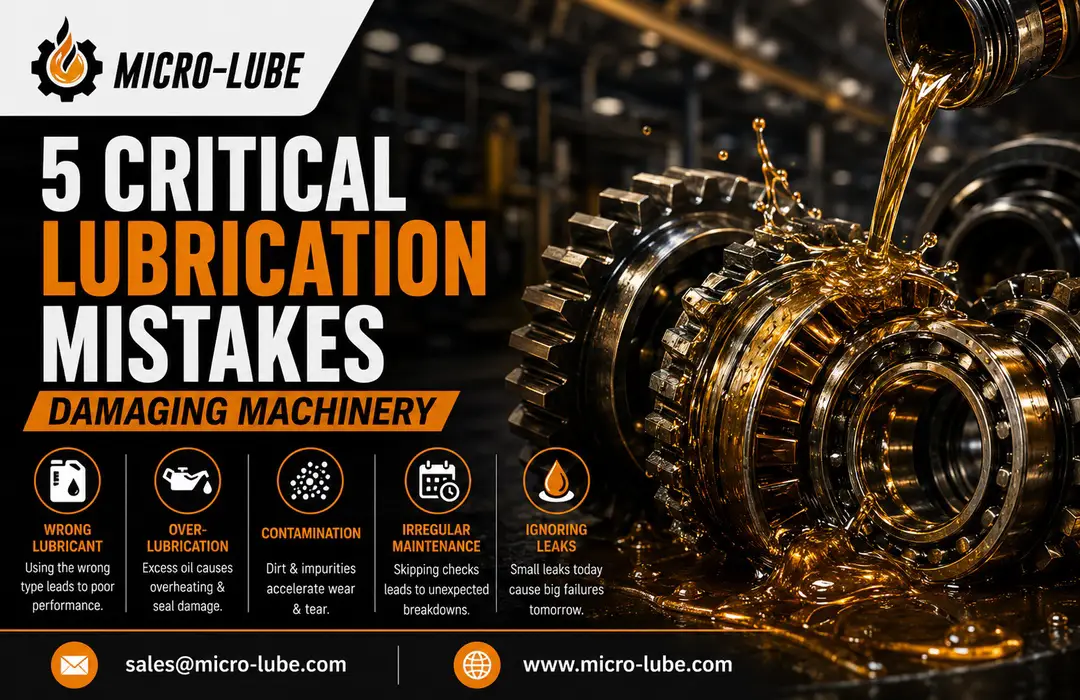
Industrial machinery is built to operate reliably under demanding conditions, but even high-quality equipment can suffer premature wear when lubrication mistakes are made or lubrication is not managed correctly. Bearings, gears, chains, compressors, pumps, motors, hydraulic equipment, and other moving components depend on the right lubricant, applied in the right quantity and at the right time.
Lubrication is more than simply adding oil or grease to a machine. A lubricant helps reduce friction and wear, manage heat, protect surfaces from corrosion, and support smooth equipment operation. When lubrication practices are incorrect, the result can be overheating, component damage, unplanned downtime, higher maintenance costs, and shortened equipment life.
For industrial facilities across the United States and Canada, developing a disciplined lubrication program is an important part of preventive and predictive maintenance. Here are five common lubrication mistakes that can quietly damage machinery and reduce operational reliability.
1. Using the Wrong Lubricant
One of the most serious lubrication mistakes is selecting a lubricant simply because it is available or because it worked on another machine.
Different components have different lubrication requirements. Bearings, gears, chains, compressors, hydraulic systems, and electric motors may require different lubricant formulations, viscosities, additive packages, or grease characteristics.
Using the wrong product can result in inadequate film strength, excessive friction, overheating, poor protection, or incompatibility with seals and other materials.
How to avoid it
Always consult the equipment manufacturer’s lubrication specifications before selecting a product. Consider:
- Required viscosity
- Operating temperature
- Load and speed
- Application method
- Lubricant type
- Additive requirements
- Environmental conditions
- Compatibility with existing lubricant
A lubricant should be selected according to the application rather than based only on brand, price, or appearance.
2. Over-Lubricating Machinery
More lubricant does not necessarily mean better protection.
Over-lubrication is particularly common with bearings and grease-lubricated components. Excess grease can increase resistance inside a bearing, generate additional heat, cause seal problems, and potentially lead to premature component failure. It can also increase lubricant consumption and maintenance costs.
Industry guidance emphasizes that both under-lubrication and over-lubrication can create problems. The objective is to deliver the correct amount at the appropriate interval.
How to avoid it
Establish a defined lubrication quantity for each lubrication point. Do not rely solely on habit or visual inspection.
For critical machinery, maintenance teams can use calculated relubrication quantities, manufacturer recommendations, condition monitoring, temperature checks, and appropriate lubrication equipment to improve consistency.
The goal should always be the right lubricant, in the right amount, at the right time.
3. Under-Lubricating or Skipping Lubrication Intervals
At the opposite end of the problem is insufficient lubrication.
When a component does not receive enough lubricant, the protective film between moving surfaces may become inadequate. This can increase friction and wear and generate excessive heat.
Under-lubrication can be especially damaging in bearings, gears, chains, and other continuously moving components. In severe cases, insufficient lubrication can contribute to component seizure and unexpected equipment failure.
How to avoid it
Create a documented lubrication schedule based on equipment requirements and operating conditions.
A good lubrication program should identify:
- Equipment and asset number
- Lubrication points
- Lubricant specification
- Required quantity
- Application method
- Lubrication frequency
- Maintenance responsibility
- Inspection requirements
Modern facilities can also use condition monitoring and automated lubrication systems where appropriate to improve consistency and reduce missed lubrication points.
4. Mixing Incompatible Lubricants
Another potentially costly mistake is mixing different oils or greases without confirming compatibility.
Two lubricants may appear similar but contain different base oils, thickeners, additives, or performance characteristics. Mixing incompatible greases can alter consistency and reduce the lubricant’s ability to protect the component.
Similarly, changing from one industrial oil to another without an appropriate transition procedure may create compatibility or performance concerns.
How to avoid it
Before changing lubricants:
- Identify the lubricant currently in use.
- Review the manufacturer’s specifications.
- Confirm compatibility with the replacement product.
- Clean or flush the system when required.
- Label lubricant containers clearly.
- Store different products separately.
- Train maintenance personnel on lubricant identification.
A centralized lubricant management program can help prevent accidental cross-contamination and product mix-ups.
5. Allowing Contamination to Enter the Lubricant
Clean lubricant can become contaminated during storage, transportation, transfer, or application.
Common contaminants include dirt, dust, water, metal particles, and other foreign materials. Once contaminants enter a lubricant, they can circulate through machinery and contribute to abrasive wear, corrosion, and lubricant degradation.
This is particularly important in industrial environments where equipment may operate outdoors, around dust, moisture, chemicals, or heavy production activity.
How to avoid it
Good lubricant storage and handling practices are essential.
Keep containers sealed when not in use and store them in a clean, dry environment. Use dedicated and clean dispensing equipment. Avoid leaving open containers exposed to dust or moisture.
For circulating oil systems, filtration and oil conditioning can help control particulate contamination and maintain the required cleanliness level.
Oil analysis can also provide valuable information about lubricant condition and contamination. Changes in viscosity, particle levels, water content, or wear metals can indicate developing problems before a major failure occurs.
Why Proper Lubrication Matters for Machinery Reliability
Lubrication is a fundamental part of equipment reliability because it directly influences friction, wear, temperature, corrosion protection, and component performance.
A properly managed lubricant forms a protective layer between contacting surfaces, helping reduce direct surface interaction. Lubricants can also assist with heat transfer in circulating oil applications and may help carry contaminants toward filtration systems.
For businesses in the United States and Canada, this matters across many sectors, including:
- Manufacturing
- Automotive production
- Construction
- Agriculture
- Mining
- Forestry
- Food processing
- Material handling
- Energy
- Transportation
- Metalworking
Equipment failures in these industries can affect production schedules, employee productivity, maintenance budgets, and customer commitments. A proactive lubrication program can help reduce avoidable problems and support more predictable maintenance.
How to Build a Better Industrial Lubrication Program
Avoiding lubrication mistakes requires more than reminding technicians to grease equipment. A reliable program should combine proper product selection, application procedures, monitoring, documentation, and employee training.
Standardize Lubricants
Where practical, standardize approved lubricants to reduce confusion and prevent accidental product mixing. However, standardization should never override the technical requirements of individual machines.
Label Lubricants Clearly
Use clear labels and dedicated storage and dispensing equipment. Color coding or identification systems can also help maintenance teams select the correct lubricant.
Follow Manufacturer Recommendations
Equipment manufacturers provide important information about lubricant type, quantity, and intervals. These recommendations should form the foundation of the lubrication plan.
Monitor Equipment Condition
Changes in operating temperature, vibration, noise, energy consumption, or lubricant condition can indicate developing lubrication problems.
For critical assets, oil analysis and other predictive maintenance technologies can provide additional information about machine and lubricant health.
Train Maintenance Personnel
Technicians should understand why lubricant selection, quantity, contamination control, storage, and application methods matter. Training helps transform lubrication from a routine task into a structured reliability activity.
Signs Your Machinery May Have a Lubrication Problem
Recognizing early warning signs can help prevent larger failures. Potential indicators include:
- Unusual bearing or gearbox noise
- Excessive operating temperature
- Increased vibration
- Oil leakage
- Grease leakage or purging
- Discolored or degraded lubricant
- Unexpected lubricant consumption
- Metal particles in oil or grease
- Reduced machine performance
- Repeated component failures
These signs do not automatically mean lubrication is the only cause. However, they should trigger an inspection and condition assessment.
Frequently Asked Questions
What is the biggest lubrication mistake?There is no single mistake that affects every machine, but using the wrong lubricant, applying too much or too little, and allowing contamination are among the most common causes of lubrication-related problems.
Can over-lubrication damage bearings?Yes. Excessive grease can increase friction and heat and may contribute to seal or bearing problems. The correct quantity and relubrication interval should be determined from equipment requirements.
How can I prevent lubricant contamination?Store lubricants properly, keep containers closed, use clean dispensing equipment, avoid cross-contamination, and use appropriate filtration or oil-conditioning practices for circulating oil systems.
How often should industrial machinery be lubricated?There is no universal interval. Lubrication frequency depends on the equipment, lubricant, load, speed, temperature, environment, and manufacturer’s recommendations. Condition-based maintenance can provide additional guidance for critical equipment.
Why is lubricant selection important?Different machines operate under different loads, speeds, temperatures, and environmental conditions. The correct lubricant is formulated to provide appropriate protection under those specific operating conditions.
Conclusion
Lubrication is one of the most important elements of industrial machinery maintenance, but simple mistakes can undermine its benefits. Using the wrong lubricant, over-lubricating, under-lubricating, mixing incompatible products, and allowing contamination into lubricants can increase wear, operating temperatures, maintenance requirements, and the risk of unexpected equipment failure.
The solution is a structured lubrication program based on correct product selection, accurate application, contamination control, scheduled maintenance, condition monitoring, and technician training. By treating lubrication as a reliability strategy rather than a routine maintenance task, industrial facilities can better protect their equipment and support long-term operational performance.
For businesses looking for dependable industrial lubricants and lubrication solutions in the United States and Canada, Micro-Lube provides products and solutions designed to support machinery maintenance, lubrication performance, and equipment reliability. Choosing the right industrial lubricant and applying it correctly can help businesses protect valuable machinery and maintain dependable operations.