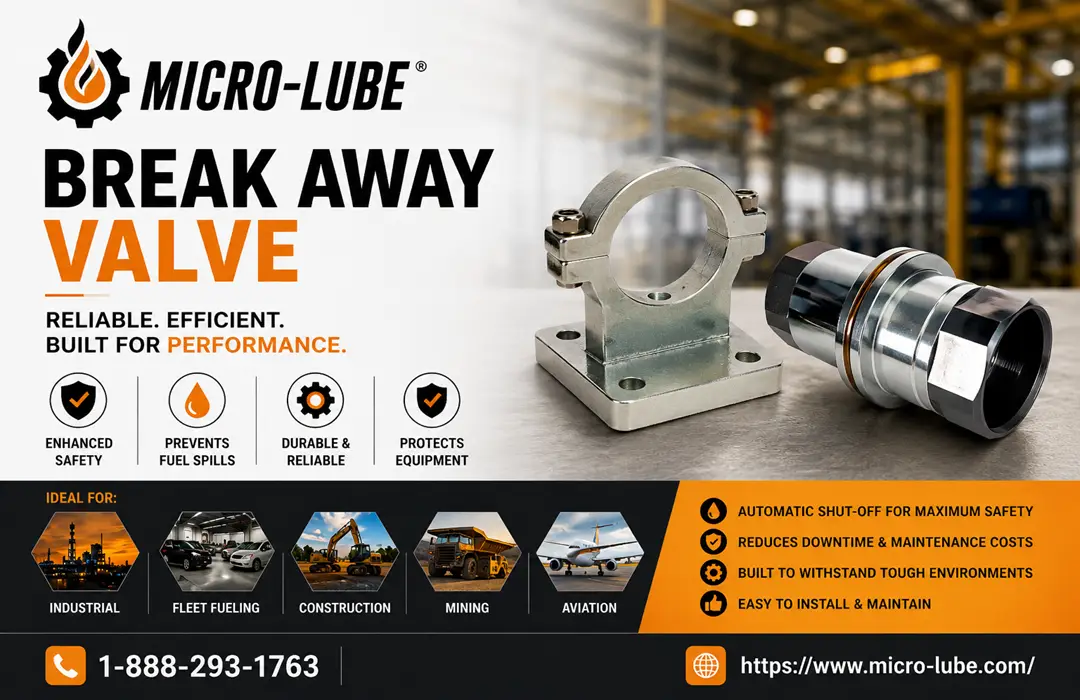
Fuel transfer systems play a critical role in industrial operations across the United States and Canada. Whether used at fueling stations, fleet management facilities, construction sites, mining operations, or industrial plants, these systems handle valuable fuels and fluids that require safe and efficient transfer. One of the most important safety components in these systems is the break away valve.
Accidental drive-offs, equipment movement, hose strain, and unexpected disconnections can lead to fuel spills, environmental hazards, operational downtime, and expensive equipment repairs. Installing reliable fuel transfer safety devices helps protect personnel, equipment, and the surrounding environment while reducing financial losses.
This guide explains how industrial break away systems, inline safety valves, and break away couplings work and why they are essential for modern fuel handling operations.
What Are Break Away Valves?
A break away valve is a safety device designed to automatically separate when excessive tension or pulling force is applied to a hose or pipeline connection. During separation, the valve instantly shuts off the flow of fuel or fluid from both ends, helping prevent leaks and spills.
These valves are commonly used in:
- Fuel dispensing systems
- Petroleum transfer operations
- Chemical handling facilities
- Fleet fueling stations
- Aviation fueling systems
- Mining and construction sites
- Industrial processing plants
The primary purpose of these safety valves is to protect equipment and the environment from accidental damage caused by unexpected hose pullaways.
How Break Away Valves Work
The operation of a break away valve is simple yet highly effective.
Under normal operating conditions, fuel flows freely through the valve. However, if a vehicle drives away while still connected or if equipment movement places excessive stress on the hose, the valve separates at a predetermined force.
When separation occurs:
- The valve disconnects safely
- Internal shutoff mechanisms close instantly
- Fuel flow stops from both sides
- Fuel leakage is minimized or eliminated
- Equipment damage is prevented
This automatic response helps facilities avoid dangerous situations that could otherwise result in environmental contamination and costly repairs.
Common Causes of Fuel System Damage
Industrial fueling systems are exposed to numerous risks every day. Some of the most common causes of equipment damage include:
Vehicle Drive-Off Incidents
One of the leading causes of fuel hose damage occurs when operators forget to disconnect fueling hoses before moving vehicles.
Excessive Hose Tension
Heavy machinery and mobile equipment can place significant strain on fueling connections.
Equipment Misalignment
Improperly positioned fueling equipment can create stress points that increase the risk of hose failure.
Human Error
Even experienced operators can make mistakes, especially in busy industrial environments.
Harsh Operating Conditions
Facilities operating in extreme weather conditions across North America face additional challenges related to equipment wear and accidental hose movement.
Installing high-quality fuel safety valves acts as a critical safeguard against these common operational risks.
Benefits of Using Break Away Valves
Prevents Costly Equipment Damage
Fuel dispensers, pumps, hoses, meters, and transfer systems represent a significant investment. A single hose pull-away incident can cause extensive damage to multiple components.
Properly installed inline safety valves disconnect before excessive force reaches critical equipment, reducing repair costs and extending equipment lifespan.
Reduces Fuel Spills
Fuel spills are expensive and potentially dangerous. Cleanup costs, environmental fines, and operational disruptions can quickly increase operational expenses.
By shutting off fuel flow immediately after separation, break away protection systems significantly reduce spill volumes and help facilities remain compliant with environmental regulations.
Enhances Workplace Safety
Fuel leaks create serious fire and slip hazards. Reducing the risk of uncontrolled fuel release helps create a safer workplace for operators and maintenance personnel.
Minimizes Operational Downtime
Equipment damage often results in unexpected shutdowns and lost productivity.
Using safety break away couplings helps facilities avoid extended repair periods and maintain continuous operations.
Protects the Environment
Environmental regulations in both the United States and Canada continue to become more stringent.
Break away safety systems support sustainability efforts by preventing fuel releases that could contaminate soil, groundwater, and nearby ecosystems.
Applications of Break Away Valves
Fueling Stations
Retail and commercial fueling stations use these valves to protect dispensers from accidental drive-offs.
Fleet Fueling Operations
Organizations operating large vehicle fleets rely on fuel transfer protection systems to reduce operational risks.
Construction Equipment Fueling
Heavy machinery often operates in challenging environments where accidental hose movement is common.
Mining Operations
Mining facilities depend on durable industrial safety valves to protect transfer systems under harsh conditions.
Aviation Fuel Systems
Aircraft fueling operations require dependable safety equipment that minimizes spill risks and improves operational efficiency.
Manufacturing Facilities
Industrial plants handling fuels, lubricants, and specialty fluids benefit from additional protection provided by inline fuel safety systems.
Understanding Inline Break Away Valves
An inline break away valve is installed directly within the fuel transfer line. Its compact design allows seamless integration into existing systems without affecting flow performance.
Advantages include:
- Easy installation
- Reliable automatic shutoff
- Reduced maintenance requirements
- Compatibility with various fuel types
- Enhanced system protection
These valves are widely used in industrial fueling applications throughout North America due to their durability and effectiveness.
Why Safety Break Away Couplings Matter
Safety break away couplings provide similar protection by separating safely during excessive pull forces while sealing both sides of the connection.
Key advantages include:
- Protection against accidental hose damage
- Reduced environmental risks
- Improved worker safety
- Lower equipment replacement costs
- Enhanced regulatory compliance
Organizations focused on workplace safety often consider these couplings an essential part of their risk management strategy.
Choosing the Right Break Away Valve
When selecting a break away valve, consider the following factors:
Fuel Compatibility
Ensure the valve is compatible with gasoline, diesel, biodiesel, aviation fuel, or other fluids used in your operation.
Flow Requirements
Choose a valve that supports the required flow rate without restricting system performance.
Pressure Rating
Verify that the valve meets the operating pressure requirements of your fueling system.
Environmental Conditions
Facilities operating in extreme temperatures should select valves designed for harsh environments.
Certification Standards
Look for products that meet applicable industry safety and performance standards.
Maintenance Best Practices
To maximize long-term performance, follow these maintenance recommendations:
- Conduct regular visual inspections
- Check for signs of wear or corrosion
- Verify proper installation alignment
- Replace damaged components immediately
- Follow manufacturer maintenance guidelines
- Test safety systems periodically
Routine maintenance helps ensure reliable operation and long-term protection.
Frequently Asked Questions
What is the purpose of a break away valve?
A break away valve automatically disconnects and shuts off fluid flow when excessive force is applied, helping prevent equipment damage and fuel spills.
Where are these valves commonly used?
They are widely used in fueling stations, fleet fueling facilities, industrial plants, mining operations, construction sites, and aviation fueling systems.
How do safety break away couplings improve safety?
These couplings automatically separate during accidental pull-away events while sealing both ends to prevent leaks and equipment damage.
Can inline safety valves reduce maintenance costs?
Yes. By preventing damage to pumps, dispensers, hoses, and transfer systems, these valves help reduce repair and replacement expenses.
Are break away valves important for environmental protection?
Yes. Many facilities use them to support environmental compliance and minimize spill-related risks.
Conclusion
Accidental hose pullaways and equipment movement can lead to serious safety hazards, environmental damage, and costly operational downtime. Installing reliable break away protection systems helps industrial facilities reduce fuel spills, protect expensive equipment, and improve workplace safety.
These safety solutions are widely used across fueling stations, construction sites, mining operations, aviation systems, and industrial plants throughout the United States and Canada. By investing in high-quality fuel transfer safety equipment, businesses can improve operational reliability, reduce maintenance costs, and support long-term environmental compliance. At Micro Lube, we provide reliable industrial fluid handling and safety solutions that help businesses protect equipment, minimize fuel spills, and maintain efficient operations. Contact Micro Lube today to learn more about our products and solutions.