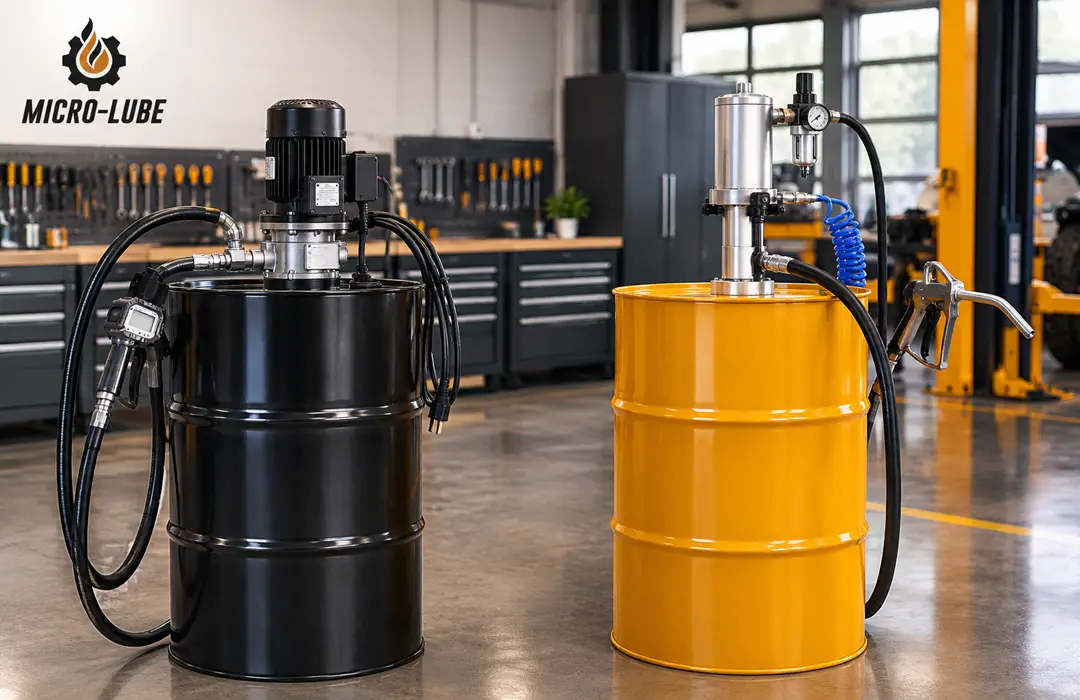
What Is an Electric Oil Pump?
An electric oil pump uses an electric motor to drive its pumping mechanism. Depending on the design, it can transfer lubricating oil from drums, tanks, or containers to machinery and dispensing equipment. Electric oil pumps are commonly considered for manufacturing facilities, automotive workshops, fleet maintenance centers, equipment service areas, and industrial lubrication applications. They are particularly useful when a dependable electrical supply is available and operators need consistent, convenient oil delivery.Key Benefits of Electric Oil Pumps
-
Convenient operation: Electric power allows operators to transfer oil without manually pumping it.
-
Consistent performance: Properly sized pumps can provide a predictable flow rate for routine dispensing.
-
Integration options: Compatible electric pumps can work with suitable meters, hoses, reels, switches, or control systems.
-
Reduced manual effort: Electric operation can simplify repetitive oil transfer tasks.
-
Practical installation: Facilities with suitable electrical connections may not need to install a separate compressed-air supply.
What Is a Pneumatic Oil Pump?
A pneumatic oil pump uses compressed air to operate its pumping mechanism. Depending on the design, air pressure drives an internal piston, diaphragm, or other mechanism that moves oil through the system. Pneumatic pumps are frequently considered for industrial workshops, fleet service centers, lubrication stations, and facilities where compressed air is already available. They can be useful when operators need to dispense lubricants at multiple workstations or use air-powered equipment as part of a broader fluid-handling setup.Key Benefits of Pneumatic Oil Pumps
-
No electric motor at the pump drive: This can be advantageous in certain installations, subject to the equipment’s design and site safety requirements.
-
Use of existing compressed air: Facilities with adequate air infrastructure may be able to integrate a compatible pneumatic pump conveniently.
-
Flexible dispensing arrangements: Suitable models can support drum-mounted systems, hoses, reels, and lubrication points.
-
Application versatility: Different pneumatic pump designs are available for different oils, viscosities, and delivery requirements.
-
Potential suitability for demanding environments: Some models are designed for specific industrial conditions, provided all operating and safety requirements are met.
Electric vs. Pneumatic Oil Pumps: Key Differences
Although both pump types transfer oil, their power sources affect installation, operating expenses, maintenance, and suitability for different industrial applications.| Comparison factor | Electric oil pumps | Pneumatic oil pumps |
|---|---|---|
| Power source | Electricity | Compressed air |
| Installation | Requires a suitable electrical supply | Requires a suitable compressed-air supply |
| Operating costs | Depends on electricity use, duty cycle, and maintenance | Includes compressed-air generation and distribution costs |
| Flow control | Depends on pump design and available controls | Depends on pump design and air-pressure regulation |
| Automation | Can support compatible electrical controls | Can support suitable pneumatic controls |
| Maintenance | Motor, seals, gears, and other design-specific components | Air components, seals, valves, and other design-specific parts |
| Typical selection priority | Convenient operation and electrical control | Existing air infrastructure and application suitability |
1. Energy Efficiency and Operating Costs
Energy consumption is an important consideration when selecting industrial oil pumps. Electric pumps use electricity directly to power a motor, while pneumatic pumps rely on compressed air, which requires energy to generate and distribute. For facilities that operate pumps frequently or for extended periods, evaluating total energy consumption can help identify potential savings. However, the actual cost difference depends on the equipment, operating schedule, flow requirements, and local electricity rates. For US manufacturing facilities and Canadian industrial operations, compare the following before making a decision:-
Electricity consumption during normal operation.
-
Compressed-air demand and compressor efficiency.
-
Air leaks and pressure losses in existing distribution lines.
-
Pump duty cycle and expected daily operating hours.
-
Maintenance costs over the expected service life.
2. Flow Rate, Oil Viscosity, and Performance
The correct pump must handle the lubricant at the required flow rate and operating pressure. Oil viscosity is particularly important because thicker oils generally require more effort to move through pumps, pipes, hoses, and dispensing equipment. Cold weather can make lubricants more viscous, which is especially relevant for facilities operating in Canadian winters or in colder parts of the United States. Before selecting either pump type, check:-
The oil manufacturer’s recommended operating temperature.
-
The lubricant’s viscosity at the expected operating temperature.
-
Required flow rate and discharge pressure.
-
Hose length, diameter, and restrictions.
-
The pump’s maximum viscosity and duty-cycle specifications.
3. Installation and Workplace Requirements
Electric oil pumps need an appropriate electrical supply, suitable wiring, and any required protection for the installation environment. Their suitability may depend on voltage, motor rating, electrical classification, and the possibility of exposure to moisture or flammable vapors. Pneumatic oil pumps need an air supply with sufficient pressure and flow. Facilities should also consider air filtration, moisture management, regulators, hoses, and any additional equipment required for safe operation. In both the United States and Canada, installation should follow applicable electrical, workplace, fire-safety, and equipment requirements. If a pump will operate in a potentially hazardous location, do not assume that pneumatic operation automatically makes the complete installation safe. Verify the pump’s certification, the lubricant’s properties, the surrounding hazards, and all relevant site requirements.4. Maintenance and Equipment Reliability
Both electric and pneumatic oil pumps require routine inspection to maintain reliable performance. The maintenance schedule depends on the pump design, lubricant, operating conditions, and manufacturer’s instructions. Electric pump maintenance may include inspecting electrical connections, seals, gears, motors, and filters where fitted. Pneumatic pump maintenance may involve checking air lines, regulators, seals, valves, and the condition of other air-operated components. For either type, operators should monitor changes in flow rate, unusual noise, leaks, overheating where applicable, and inconsistent dispensing. A preventive maintenance plan should include:-
Inspecting hoses, fittings, and connections for leaks or damage.
-
Checking the lubricant for contamination and confirming compatibility with pump materials.
-
Keeping inlet strainers and other specified components clean.
-
Monitoring pump performance against its normal operating range.
-
Following the manufacturer’s service and replacement recommendations.
Which Oil Pump Is Best for Your Industry?
The best choice depends on how your facility handles oil and which utilities are available.
Choose an electric oil pump when:
-
Your facility has a suitable electrical supply.
-
You want convenient, motor-driven oil transfer.
-
Electrical controls or compatible dispensing accessories are important.
-
You want to evaluate direct electrical energy consumption.
Consider a pneumatic oil pump when:
-
Your facility already has adequate compressed air.
-
The selected model suits your oil viscosity and flow requirements.
-
You need a compatible air-powered dispensing arrangement.
-
The pump meets the safety requirements of your operating environment.
Manufacturing and Production Facilities
Manufacturing plants often need reliable oil delivery for equipment maintenance, lubrication stations, and routine servicing. Electric pumps may be practical where electrical infrastructure and suitable controls are readily available. Pneumatic pumps can also be appropriate when compressed air is accessible at the required workstations.Automotive and Fleet Maintenance Centers
Automotive workshops and fleet service facilities may transfer lubricants from bulk storage or drums to individual vehicles and equipment. Either pump type can be suitable when matched with compatible hoses, reels, meters, and dispensing accessories.Mining and Construction Operations
Mining and construction businesses often maintain heavy equipment in demanding conditions. Pump selection should account for lubricant viscosity, ambient temperature, equipment mobility, power availability, and contamination risks. In remote locations, available electrical power and compressed-air infrastructure may strongly influence the decision.Agricultural and Equipment Service Facilities
Agricultural service facilities may need to transfer lubricants for tractors, harvesters, and other machinery. The most appropriate option depends on the number of machines serviced, frequency of oil transfer, and whether the installation is fixed or mobile.How to Choose the Right Industrial Oil Pump
Before purchasing an electric or pneumatic oil pump, work through this checklist.-
Identify the lubricant: Confirm the oil type, viscosity, temperature range, and material compatibility.
-
Determine the required flow: Estimate how much oil must be dispensed and how quickly.
-
Check operating pressure: Confirm that the pump can meet the system’s pressure requirements.
-
Review available utilities: Compare electrical supply with compressed-air capacity.
-
Consider installation conditions: Account for available space, hose routing, mobility, and environmental hazards.
-
Calculate total ownership costs: Include purchase, installation, energy, maintenance, and replacement parts.
-
Check accessories: Make sure the pump is compatible with the required hoses, reels, meters, and fittings.
-
Follow manufacturer guidance: Confirm operating limits and maintenance intervals before installation.