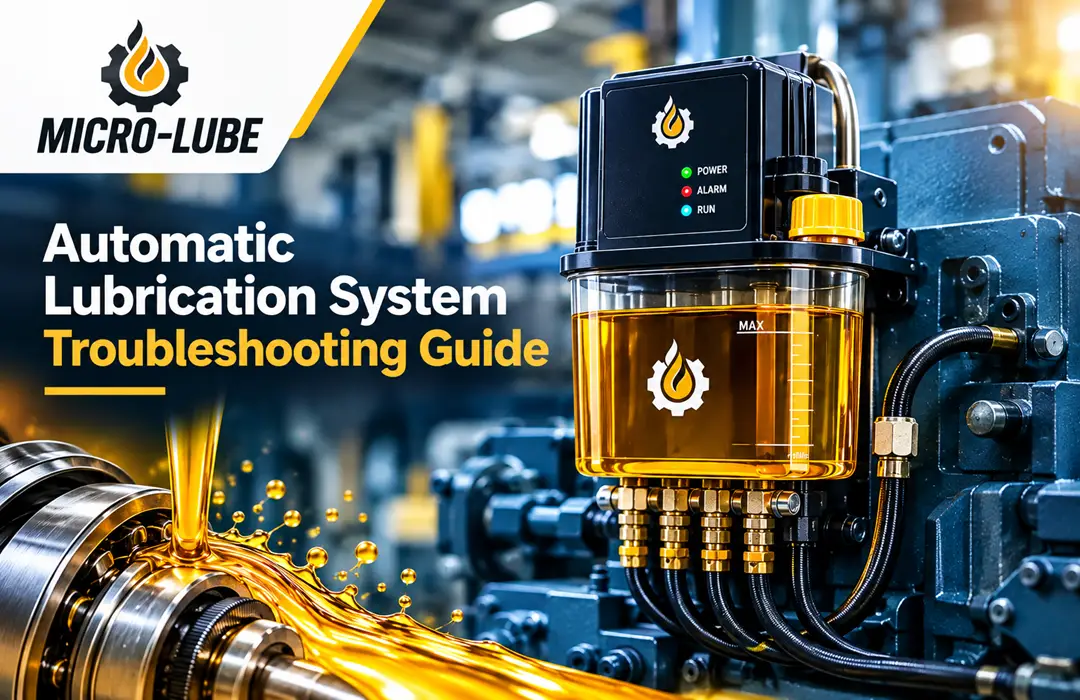
Automatic lubrication systems help industrial machinery receive consistent amounts of oil or grease at predetermined intervals. They can support bearings, bushings, gears, chains, pins, and other moving components while reducing the need for frequent manual lubrication. However, like any mechanical system, an automatic lubricator can develop problems that affect lubricant delivery and equipment performance. Automatic lubrication system troubleshooting starts with identifying the symptoms, checking the lubricant supply, inspecting the pump and distribution lines, and verifying that the system’s controls and metering components operate correctly. A structured approach can help maintenance teams identify problems before they lead to unnecessary equipment downtime.
For industrial facilities across the USA and Canada, troubleshooting becomes especially important when machinery operates continuously, under heavy loads, in dusty environments, or through significant seasonal temperature changes.
How Does an Automatic Lubrication System Work?
Before troubleshooting a problem, it helps to understand the basic operating process.
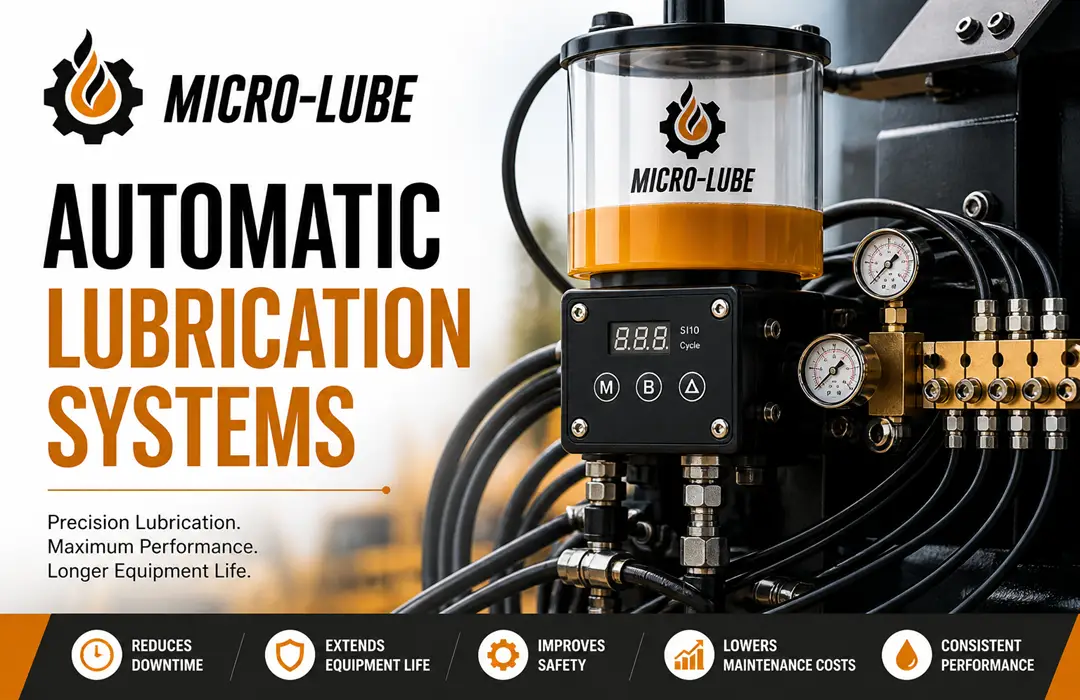
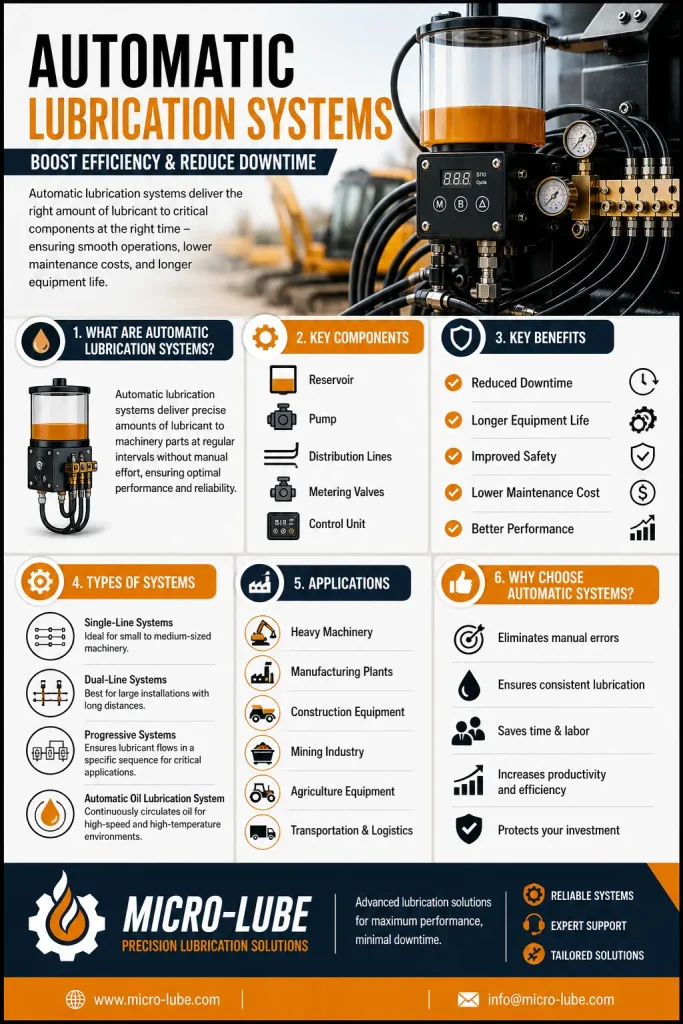
A typical automatic lubrication system includes a lubricant reservoir, pump, controller or timer, distribution lines, metering devices, and lubrication points. Depending on the system design, the pump moves oil or grease from the reservoir through the distribution network. Metering components then control how much lubricant reaches individual points.
Micro-Lube’s automatic lubrication information describes systems that use components such as pumps, distribution lines, metering devices, and control systems to deliver lubricant to targeted machine components.
When one part of this chain does not work correctly, the entire lubrication process can become inconsistent.
Common Automatic Lubrication System Problems
1. The Pump Is Not Operating
If the pump does not activate, the first step is to determine whether the problem is electrical, mechanical, or related to the control system.
Check:
- Power supply
- Electrical connections
- Fuses or circuit protection
- Controller settings
- Pump motor operation
- Reservoir level
- Visible damage or unusual noise
For electrically powered systems, verify that the system receives the correct voltage according to the manufacturer’s specifications. Do not bypass electrical safety devices simply to make the pump operate.
If the controller is functioning but the pump does not respond, the pump or its electrical circuit may require further inspection.
2. Lubricant Is Not Reaching the Lubrication Points
A functioning pump does not necessarily mean that lubricant is reaching the bearings or other components.
Possible causes include:
- Blocked distribution lines
- Damaged hoses
- Loose fittings
- Air trapped in the lines
- Incorrect metering components
- Excessively thick lubricant
- Frozen or hardened lubricant
- Restricted lubrication fittings
Start by checking the system from the reservoir toward the lubrication points. Look for visible leaks, damaged tubing, disconnected lines, or lubricant buildup around fittings.
If only one lubrication point is receiving little or no lubricant while others operate normally, the problem may be isolated to that branch, fitting, or metering device.
3. The Lubrication Lines Are Blocked
Blocked lines are a common cause of inconsistent lubricant delivery. Grease can harden or become difficult to move under certain operating and storage conditions. Contamination can also restrict small passages.
Inspect lines for:
- Kinks
- Crushing
- Cracks
- Hardened lubricant
- Contamination
- Loose connections
- Physical damage
Do not assume that increasing pump pressure is the correct solution. Excessive pressure can damage components or create unsafe operating conditions. Follow the equipment manufacturer’s pressure limits and troubleshooting procedures.
4. The System Is Delivering Too Much Lubricant
Over-lubrication can be just as problematic as insufficient lubrication. Excess grease around a bearing can increase friction and heat, while excessive lubricant consumption may indicate incorrect settings or a metering problem.
Possible causes include:
- Incorrect timer settings
- Incorrect metering device
- Excessive pump cycles
- Incorrect lubricant volume
- Incorrect application settings
- A damaged metering component
Review the recommended lubricant quantity and frequency for the specific equipment. Do not simply reduce lubrication because grease appears around a component; some applications naturally purge a small amount of lubricant.
5. The System Is Delivering Too Little Lubricant
Insufficient lubrication can increase friction, wear, heat, and the risk of premature component failure.
Possible causes include a low reservoir level, blocked lines, incorrect metering, insufficient pump operation, leaks, or lubricant that does not suit the application.
Look for warning signs such as:
- Increased bearing temperature
- Unusual noise
- Higher vibration
- Visible wear
- Dry or poorly lubricated components
- Reduced equipment performance
Micro-Lube also identifies inadequate lubrication, blocked lines, incorrect lubricant selection, and pump or electrical problems among potential causes of lubrication-system problems.
6. Air Is Entering the Lubrication System
Air can interfere with consistent lubricant delivery, particularly in systems that require reliable flow through relatively long distribution lines.
If the system produces intermittent delivery, inspect connections and fittings for potential air-entry points. Check the reservoir and pump connection, and follow the manufacturer’s recommended priming procedure.
Avoid introducing additional air during lubricant filling. Clean filling equipment and proper lubricant-handling practices can help maintain consistent system operation.
7. The Lubricant Is Not Suitable
Lubricant selection plays an important role in automatic lubrication performance.
A lubricant that is too thick for the system may create excessive resistance and restrict delivery. A lubricant that does not meet the equipment requirements may also provide inadequate protection.
Before changing lubricant, verify:
- Required viscosity or grease consistency
- Operating temperature range
- Equipment manufacturer’s recommendations
- Compatibility with seals and system components
- Pump and metering-system requirements
Do not mix different greases or oils unless compatibility has been confirmed.
8. Cold Weather Is Affecting Lubricant Flow
Temperature can have a major effect on lubricant behavior. This is particularly relevant for equipment operating through cold winters in regions of Canada and thautomatic lubricatione northern United States.
Grease and oil can become more viscous as temperatures fall. As a result, pumps may require more effort to move the lubricant, while distribution lines may experience increased resistance.
For cold-weather applications, review the lubricant’s operating-temperature range and ensure that the automatic lubrication system is suitable for the expected conditions.
9. The Controller or Timer Is Incorrectly Configured
An automatic lubrication system depends on correct timing or control settings. If the controller is incorrectly programmed, the equipment may receive lubricant too frequently or not frequently enough.
Check:
- Lubrication interval
- Pump cycle duration
- Alarm settings
- Operating mode
- Sensor inputs
- System clock or timing configuration
When troubleshooting, record the original settings before making changes. This creates a useful reference if the system needs to be returned to its previous configuration.
A Practical Automatic Lubrication System Troubleshooting Checklist
When a system is not operating correctly, maintenance personnel can follow a logical sequence:
Step 1: Check the lubricant reservoir. Confirm that sufficient oil or grease remains and inspect the lubricant for contamination or abnormal condition.
Step 2: Check the power and controller. Verify that the system receives power and that the controller or timer operates normally.
Step 3: Inspect the pump. Check whether the pump activates during a normal lubrication cycle.
Step 4: Inspect distribution lines. Look for leaks, kinks, disconnected fittings, blockages, and physical damage.
Step 5: Check metering components. Confirm that metering devices are appropriate for the application and functioning correctly.
Step 6: Verify lubricant delivery. Determine whether lubricant reaches the intended lubrication points.
Step 7: Inspect the machine. Check bearings, bushings, gears, pins, and other components for signs of inadequate or excessive lubrication.
Step 8: Review system settings. Compare timing and delivery settings with the equipment manufacturer’s recommendations.
How Preventive Maintenance Reduces Lubrication Problems
Troubleshooting should not replace routine maintenance. Regular inspection can identify small problems before they become equipment failures.
Useful practices include:
- Inspecting lubricant lines regularly
- Checking reservoir levels
- Keeping filling equipment clean
- Monitoring lubricant consumption
- Inspecting fittings and connections
- Checking system alarms
- Reviewing pump operation
- Monitoring bearing temperature and vibration
- Replacing damaged components promptly
- Maintaining accurate service records
Micro-Lube also recommends regular system inspections during equipment downtime and periodically running systems when appropriate to help prevent lubricant hardening and line blockage.
Automatic Lubrication in USA and Canada Industrial Applications
Automatic lubrication systems are used across manufacturing, construction, mining, agriculture, transportation, and other industrial applications. These environments can place different demands on lubrication equipment, from continuous production schedules to heavy loads, dust, vibration, and extreme temperatures.
In Western Canada, for example, industrial and mining equipment may operate in demanding outdoor conditions where temperature changes can influence lubricant flow. In the USA, manufacturing plants, construction fleets, agricultural equipment, and material-handling operations may require reliable lubrication over long operating cycles.
The right troubleshooting procedure therefore depends on the specific equipment, lubrication system design, lubricant, operating environment, and manufacturer’s requirements.
When Should You Contact a Lubrication Specialist?
If basic inspections do not identify the problem, continued operation may create additional equipment damage. Professional assistance may be appropriate when:
- The pump repeatedly fails
- System pressure behaves unexpectedly
- Lubricant cannot reach multiple lubrication points
- Electrical faults continue
- Components repeatedly clog
- Bearings show signs of severe lubrication failure
- The system requires major component replacement
- The correct lubricant or settings are uncertain
A specialist can evaluate the complete lubrication circuit rather than focusing on only one component.
Frequently Asked Questions
What is the most common automatic lubrication system problem?Common issues include low lubricant levels, blocked or damaged lines, pump problems, incorrect settings, lubricant incompatibility, and metering-component problems. The actual cause depends on the system and application.
Why is my automatic lubrication system not pumping grease?Check the reservoir level, power supply, pump operation, lubricant condition, and distribution lines. A blockage or unsuitable lubricant can also prevent proper delivery.
How do I know if my automatic lubrication system is working?Check whether the pump cycles correctly, lubricant moves through the distribution system, and the intended lubrication points receive the appropriate amount. Equipment temperature, noise, vibration, and lubricant consumption can also provide useful clues.
Can cold temperatures affect automatic lubrication?Yes. Low temperatures can increase lubricant viscosity and make pumping and distribution more difficult. Cold-weather applications should use a lubricant and system configuration appropriate for the expected temperature range.
How can I prevent automatic lubrication system failures?Regularly inspect the pump, reservoir, lines, fittings, metering components, and controller. Use the correct lubricant, maintain clean filling practices, monitor system performance, and follow the equipment manufacturer’s maintenance recommendations.
Conclusion
Effective automatic lubrication system troubleshooting starts with understanding how lubricant moves from the reservoir to each lubrication point. Problems with the pump, power supply, controller, lubricant, metering devices, fittings, or distribution lines can all affect delivery.
For industrial operations throughout the USA and Canada, regular inspections and preventive maintenance can help identify lubrication problems before they contribute to costly equipment damage or unplanned downtime. A properly selected and maintained automatic lubrication system can provide consistent lubricant delivery while supporting reliable machinery operation.
Micro-Lube provides lubrication, filtration, and fluid-management solutions for industrial applications. If you are experiencing recurring lubrication problems, evaluating a new system, or looking for support with your existing equipment, contact Micro-Lube to discuss your application and lubrication requirements.