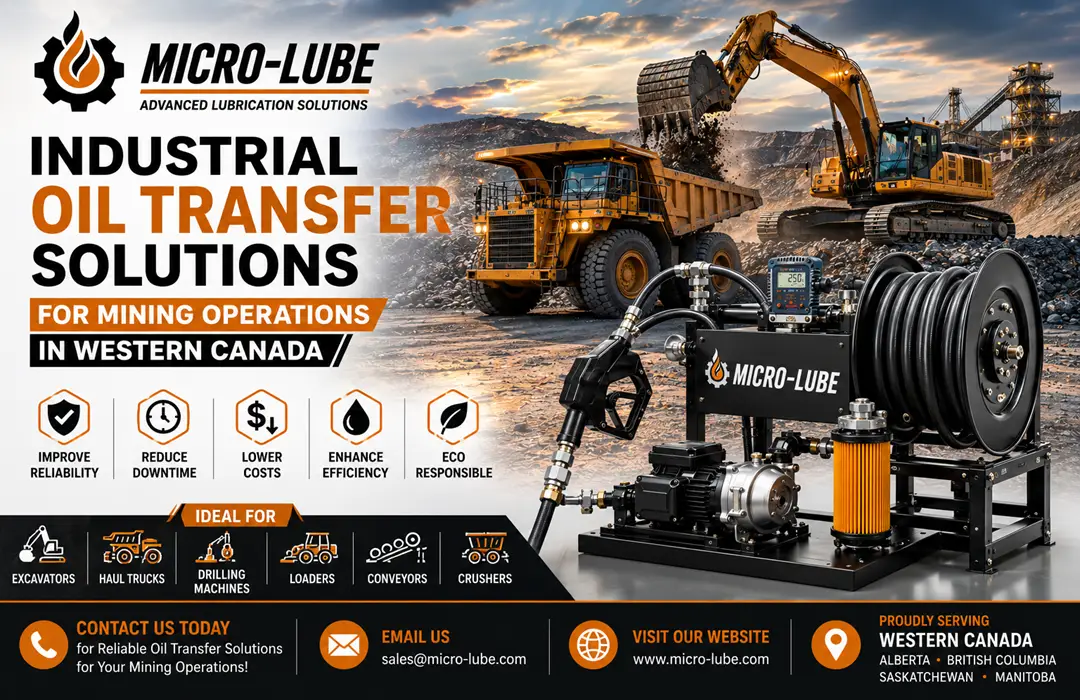
Mining is one of Western Canada’s most demanding industries, operating in rugged environments where heavy machinery must perform reliably under extreme conditions. From the oil sands of Alberta to the mining regions of British Columbia, Saskatchewan, and Manitoba, mining companies rely on efficient lubrication and fluid handling systems to keep equipment running safely and productively. Industrial oil transfer solutions play a critical role in maintaining excavators, haul trucks, wheel loaders, hydraulic shovels, drills, crushers, conveyors, and support vehicles. Clean and efficient oil transfer not only protects expensive equipment but also reduces maintenance costs, improves productivity, and minimizes costly downtime.
This guide explains why industrial oil transfer systems are essential for mining operations in Western Canada and how choosing the right equipment can improve operational efficiency.
Why Oil Transfer Matters in Mining Operations
Mining equipment operates continuously under heavy loads, often in dusty, wet, and freezing environments. Hydraulic systems, gearboxes, engines, and bearings depend on clean lubricants to function efficiently.
Improper oil transfer methods can introduce contaminants such as dust, moisture, and metal particles into lubricants. These contaminants accelerate wear, reduce equipment life, and increase the risk of mechanical failures.
A professional oil transfer system helps ensure lubricants remain clean from storage to application, protecting critical machine components throughout their service life.
Challenges Faced by Mining Companies in Western Canada
Mining operations across Alberta, British Columbia, Saskatchewan, and Manitoba experience several lubrication challenges.
Extreme Weather Conditions
Western Canada experiences freezing winters and hot summers. Temperature fluctuations affect oil viscosity, making reliable oil transfer equipment essential throughout the year.
Remote Mining Locations
Many mines are located far from urban centres, making equipment reliability a top priority. Unexpected failures can lead to expensive delays while waiting for replacement parts or maintenance teams.
Heavy Equipment Utilization
Mining machines often operate around the clock. Continuous use increases lubricant consumption and demands efficient oil handling systems that can support high-volume operations.
Dust and Contamination
Mining environments generate significant amounts of airborne dust and debris. Without proper oil transfer equipment, contaminants can enter lubricants during filling or storage, causing premature component wear.
Importance of Clean Oil Transfer
Keeping lubricants clean is one of the most effective ways to improve equipment reliability.
Benefits include:
- Reduced hydraulic component wear
- Longer engine life
- Extended gearbox service intervals
- Improved fuel efficiency
- Lower maintenance costs
- Increased equipment availability
- Better overall machine performance
Using dedicated oil transfer equipment minimizes contamination while ensuring accurate and efficient lubricant delivery.
Essential Industrial Oil Transfer Equipment for Mining
Modern mining facilities use several specialized oil transfer solutions.
Electric Oil Transfer Pumps
Electric oil pumps provide fast, reliable lubricant transfer for high-volume maintenance operations. They reduce manual effort while improving efficiency and consistency.
These pumps are ideal for transferring engine oils, hydraulic fluids, transmission oils, and gear lubricants.
Air Operated Oil Pumps
Air-powered pumps are widely used in mining workshops because they offer dependable performance with minimal maintenance.
They are suitable for handling various lubricant viscosities while operating safely in demanding industrial environments.
Oil Transfer Kits
Complete oil transfer kits combine pumps, hoses, dispensing nozzles, meters, and accessories into one convenient solution.
These systems simplify maintenance while reducing the risk of spills and contamination.
Hose Reels
Industrial hose reels improve workplace safety by keeping hoses organized and protected from damage.
Benefits include:
- Reduced trip hazards
- Faster maintenance
- Longer hose life
- Improved workflow
Digital Oil Meters
Digital flow meters allow maintenance teams to monitor lubricant usage accurately.
Advantages include:
- Precise fluid measurement
- Reduced lubricant waste
- Better inventory management
- Improved maintenance records
Reducing Equipment Downtime Through Proper Oil Handling
Unexpected downtime is one of the biggest expenses in mining.
A well-designed oil transfer system supports preventive maintenance by ensuring lubricants are delivered cleanly and efficiently whenever equipment requires servicing.
This helps maintenance teams complete lubrication tasks faster while minimizing contamination risks that often lead to hydraulic or mechanical failures.
Reliable oil handling equipment also improves workshop efficiency by reducing manual labour and speeding up routine maintenance procedures.
Supporting Predictive Maintenance Programs
Many mining companies have adopted predictive maintenance strategies to maximize equipment availability.
Industrial oil transfer solutions support these programs by:
- Maintaining lubricant cleanliness
- Preventing cross-contamination
- Improving fluid management
- Supporting scheduled maintenance
- Extending oil service life
- Reducing emergency repairs
Clean lubricants contribute significantly to accurate condition monitoring and longer equipment life.
Choosing the Right Oil Transfer Solution
When selecting industrial oil transfer equipment, mining companies should consider several important factors.
Equipment Compatibility
Ensure pumps and accessories are compatible with the lubricants used throughout the operation.
Flow Rate Requirements
Choose equipment capable of meeting daily maintenance demands without unnecessary delays.
Durability
Mining environments require rugged equipment capable of handling vibration, dust, moisture, and frequent use.
Ease of Maintenance
Simple maintenance procedures reduce downtime and help maximize equipment availability.
Safety Features
Look for systems designed to reduce spills, improve operator safety, and comply with workplace safety standards.
Applications Across Mining Operations
Industrial oil transfer systems support numerous maintenance applications, including:
- Hydraulic oil transfer
- Engine oil dispensing
- Gear oil transfer
- Differential servicing
- Transmission lubrication
- Mobile maintenance trucks
- Central lubrication systems
- Workshop service bays
- Preventive maintenance programs
- Fleet maintenance operations
Their versatility makes them an essential investment for mining companies operating across Western Canada.
Benefits of Investing in Quality Oil Transfer Equipment
High-quality oil transfer solutions provide measurable operational advantages.
Improved Equipment Reliability
Clean lubricant reduces wear and protects critical machine components.
Lower Maintenance Costs
Reduced contamination leads to fewer component failures and lower repair expenses.
Increased Productivity
Faster oil transfers reduce maintenance time and increase equipment availability.
Better Environmental Protection
Controlled dispensing minimizes spills and reduces lubricant waste.
Enhanced Worker Safety
Modern oil transfer systems improve workplace organization while reducing manual handling risks.
Why Mining Companies Across Western Canada Choose Professional Oil Transfer Solutions
Mining operations cannot afford unexpected equipment failures caused by contaminated lubricants or inefficient maintenance practices.
Investing in reliable oil transfer systems helps companies improve operational efficiency, extend equipment life, reduce maintenance costs, and maximize productivity throughout the year.
Whether servicing hydraulic excavators, haul trucks, loaders, crushers, or drilling equipment, professional oil transfer equipment ensures lubricants reach machinery cleanly, accurately, and efficiently.
Why Choose Micro-Lube?
Micro-Lube is a trusted supplier of high-quality industrial lubrication and fluid handling equipment for demanding industries across Canada. We provide durable, high-performance oil transfer solutions designed to improve maintenance efficiency, protect valuable equipment, and reduce operating costs.
Whether your mining operation is located in Alberta, British Columbia, Saskatchewan, or Manitoba, Micro-Lube proudly serves as an authorized distributor of SAMSON Canada products. We provide premium industrial oil transfer equipment, lubrication systems, hose reels, pumps, and fluid handling solutions designed to increase equipment reliability, reduce maintenance costs, and maximize productivity across Western Canada’s mining industry.
Contact Micro-Lube Today
Looking for reliable industrial oil transfer solutions for your mining operation in Western Canada?
Contact Micro-Lube today to speak with our experts. We’ll help you choose the right oil transfer equipment for your maintenance requirements and provide solutions that improve efficiency, reduce downtime, and protect your valuable mining equipment.
Visit https://www.micro-lube.com/ to explore our complete range of industrial lubrication and oil transfer products.
FAQs
1. What are industrial oil transfer solutions?
Industrial oil transfer solutions include pumps, hose reels, flow meters, dispensing systems, and accessories designed to safely transfer lubricants while preventing contamination and improving maintenance efficiency.
2. Why are oil transfer systems important for mining operations?
They help deliver clean lubricants to heavy equipment, reducing wear, extending equipment life, minimizing downtime, and improving overall productivity.
3. Which industries benefit from industrial oil transfer equipment?
Mining, construction, manufacturing, forestry, agriculture, transportation, oil and gas, marine, and heavy equipment maintenance industries all benefit from professional oil transfer systems.
4. Can oil transfer systems reduce lubricant contamination?
Yes. Properly designed oil transfer equipment minimizes exposure to dirt, dust, moisture, and other contaminants during storage and dispensing.
5. What equipment is commonly used for industrial oil transfer?
Common equipment includes electric oil pumps, air-operated pumps, oil transfer kits, hose reels, dispensing nozzles, digital flow meters, and lubrication accessories.
